-
The Hidden Threat of Fake and Substandard Antibiotics: New Research from Belgium Exposes Global Risks
Antimicrobial resistance (AMR) is often called a “silent pandemic,” and for good reason. By 2021, it was linked to nearly 5 million deaths worldwide, with projections of 39 million annual deaths within 25 years if left unaddressed. While governments and healthcare systems work to promote responsible antibiotic use through stewardship programs, a growing menace is undermining these efforts: substandard and falsified (SF) antibiotics. A new study published in Antibiotics (Basel) sheds light on this crisis, focusing on 40 SF antibiotic samples seized in Belgium between 2024 and 2025—and the findings are alarming, even for a region with strict pharmaceutical regulations. The Scope of the Problem: SF Antibiotics in Europe’s Regulated…
You May Also Like

Rifabutin-Based Therapy for Pulmonary Tuberculosis in Solid Organ Transplant Recipients: New Evidence to Guide Clinical Practice

Rifaximin Use in Cirrhosis Patients with Hepatic Encephalopathy: A Hidden Risk of Antimicrobial Resistance

Tuberculosis in Immigrants: Rifampicin Treatment & 2025 Screening Guidelines
-
The Battle Against Antimicrobial Resistance: Unpacking Molecular Mechanisms of Newly Approved Antibiotics (2017-2025)
In the realm of global public health, few threats loom as large as antimicrobial resistance (AMR). Imagine a world where once-treatable bacterial infections—from urinary tract infections to life-threatening pneumonia—become untreatable. This isn’t science fiction; it’s a growing reality as bacteria evolve to outsmart the drugs designed to kill them. The World Health Organization (WHO) has sounded the alarm, classifying pathogenic bacteria into three risk tiers (critical, high, and medium) to prioritize AMR prevention and control. But there’s a glimmer of hope: between 2017 and 2025, 15 new antibiotics received approval from regulatory giants like the U.S. Food and Drug Administration (FDA) and the European Medicines Agency (EMA). Yet, even these…
You May Also Like

Navigating CMC Changes in IND Applications: Classification, Impact Assessment & FDA/NMPA Regulatory Review Compliance

The Hidden Threat of Fake and Substandard Antibiotics: New Research from Belgium Exposes Global Risks

Zhengzhou Minzhong Pharmaceutical | Ekspert i Rifamycin-derivater siden 1994
-
Antibiotics and AMR in Aquaculture: A Global Concern, With a Focus on Bangladesh
If you’re someone who enjoys seafood—whether it’s a grilled salmon fillet, a plate of shrimp curry, or a side of tilapia—you might not realize the hidden challenge behind today’s abundant supply: the rise of antimicrobial resistance (AMR) linked to antibiotic use in aquaculture. As global demand for seafood grows, aquaculture has become a critical industry, but its rapid expansion has come with a 代价: overreliance on antibiotics that’s fueling a public health crisis. Let’s dive into what this means, why Bangladesh (a major player in freshwater aquaculture) is in the spotlight, and what we can do to fix it. The Boom in Aquaculture—And Its Antibiotic Problem First, let’s set the…
-
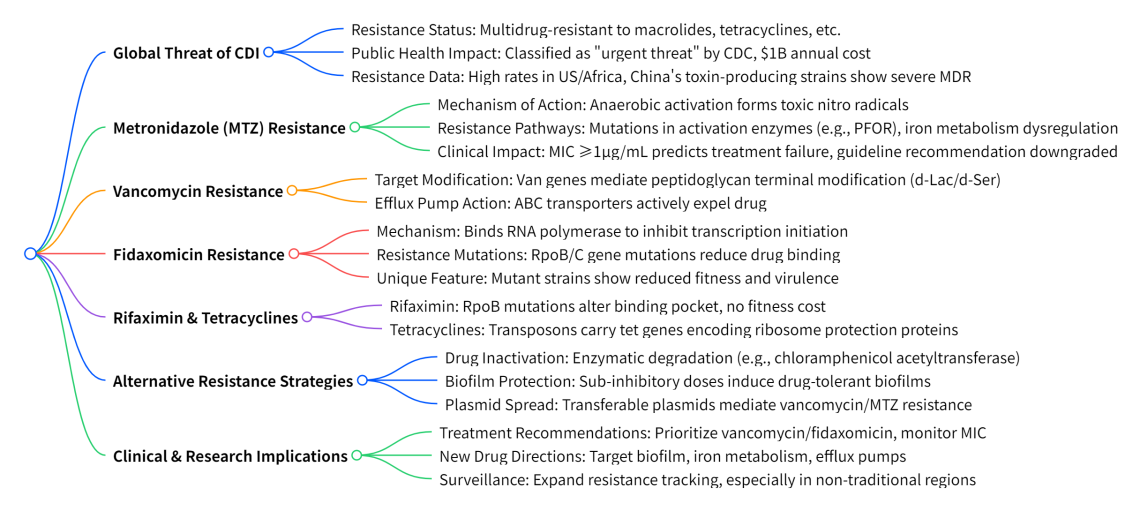
Clinical Insights: Resistance Mechanisms of Common Drugs for Clostridioides difficile Infection
Clostridioides difficile (CD) infection (CDI) remains a pressing global health challenge, driven by increasing antimicrobial resistance (AMR) and the bacterium’s ability to thrive in gut environments disrupted by antibiotics. Let’s explore how CD develops resistance to commonly used drugs, why this matters for treatment, and what it means for future therapies. The Growing Menace of CDI and Antibiotic Resistance CD is a spore-forming bacterium well-known for resisting multiple antibiotics like macrolides, tetracyclines, and fluoroquinolones. When broad-spectrum antibiotics wipe out the protective gut microbiota, CD takes advantage, overgrowing and producing toxins that cause severe diarrhea, colitis, and even life-threatening complications. Since 2013, the U.S. CDC has labeled CD as an “urgent…

Professional manufacturer of Rifamycin derivatives sine 1994